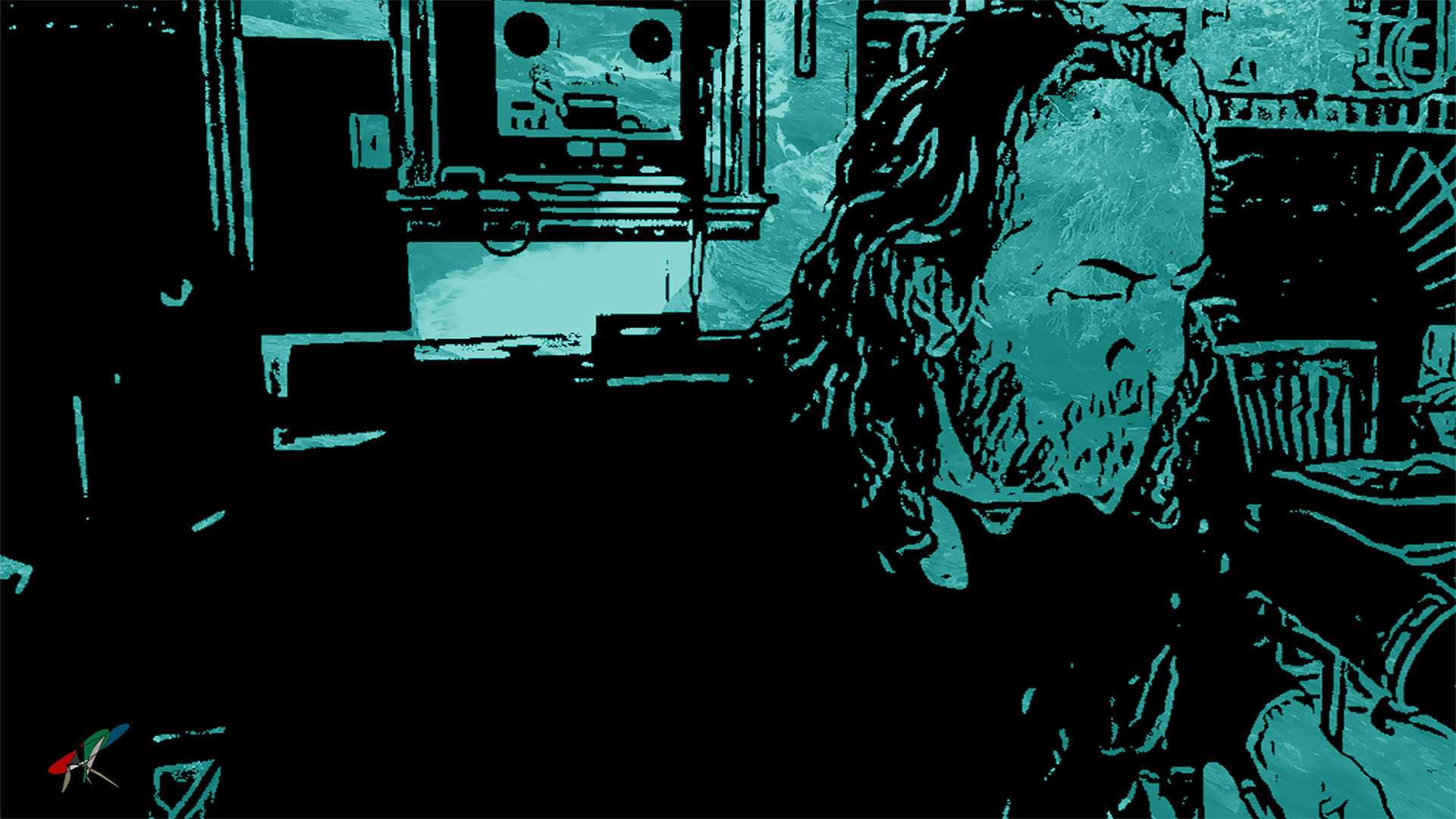
Paul Kitchen is a Washington, D.C.-born singer-songwriter, multi-instrumentalist, and recording engineer whose career spans nearly five decades and nearly three dozen albums. Working out of his own recording studio, inSync Asylum, Kitchen writes, performs, engineers, and masters his records entirely himself — playing every instrument from electric guitar, bass, and drums to keyboards, piano, lap steel, and vocals. An unconventional technician, he learned to play guitar upside-down in the tradition of blues legend Albert King, a detail that hints at the idiosyncratic creativity running through all of his work.
The seeds of Kitchen’s one-man-band approach were planted early. As a teenager, he was struck by two landmark 1970 albums — Paul McCartney’s self-titled solo debut and the self-titled album by Emitt Rhodes — both of which were solo home-recorded efforts in which a single artist played every instrument. Those records proved to Kitchen that a lone musician, armed with enough vision and determination, could create something fully realized on his own terms. It’s a philosophy he has carried into every studio session since.
Kitchen launched his recording career in 1977 and remained a prolific force through the 1980s, releasing a string of albums and performing with the band Petty Tyrant before stepping back from recording for much of the 1990s. His 2001 album A Matter of Time produced his best-known song, “Daddy’s Little Girl,” before another extended absence preceded a full creative resurgence. Living With Fiction (2015) marked his return, followed swiftly by a David Bowie tribute single and Wheelhouse (2016), the first of his covers albums.
The years since have seen Kitchen at his most prolific, releasing a steady stream of singles, live recordings, and full-length albums — including Blue Tattoo (2018), Magic Moon (2019), and Potshots From Over the Hill (2020) — alongside his podcast, Paul Kitchen | Strings Attached. His output continued unabated into the mid-2020s with Fighting Gravity (2023), Tuscazure (2024), and Turquoise in Blue (2025). In April 2026, he released Blame It On Midnight, his third covers album, exploring themes of love, loss, heartbreak, and mystery — another chapter in one of independent music’s most quietly remarkable long-game careers.